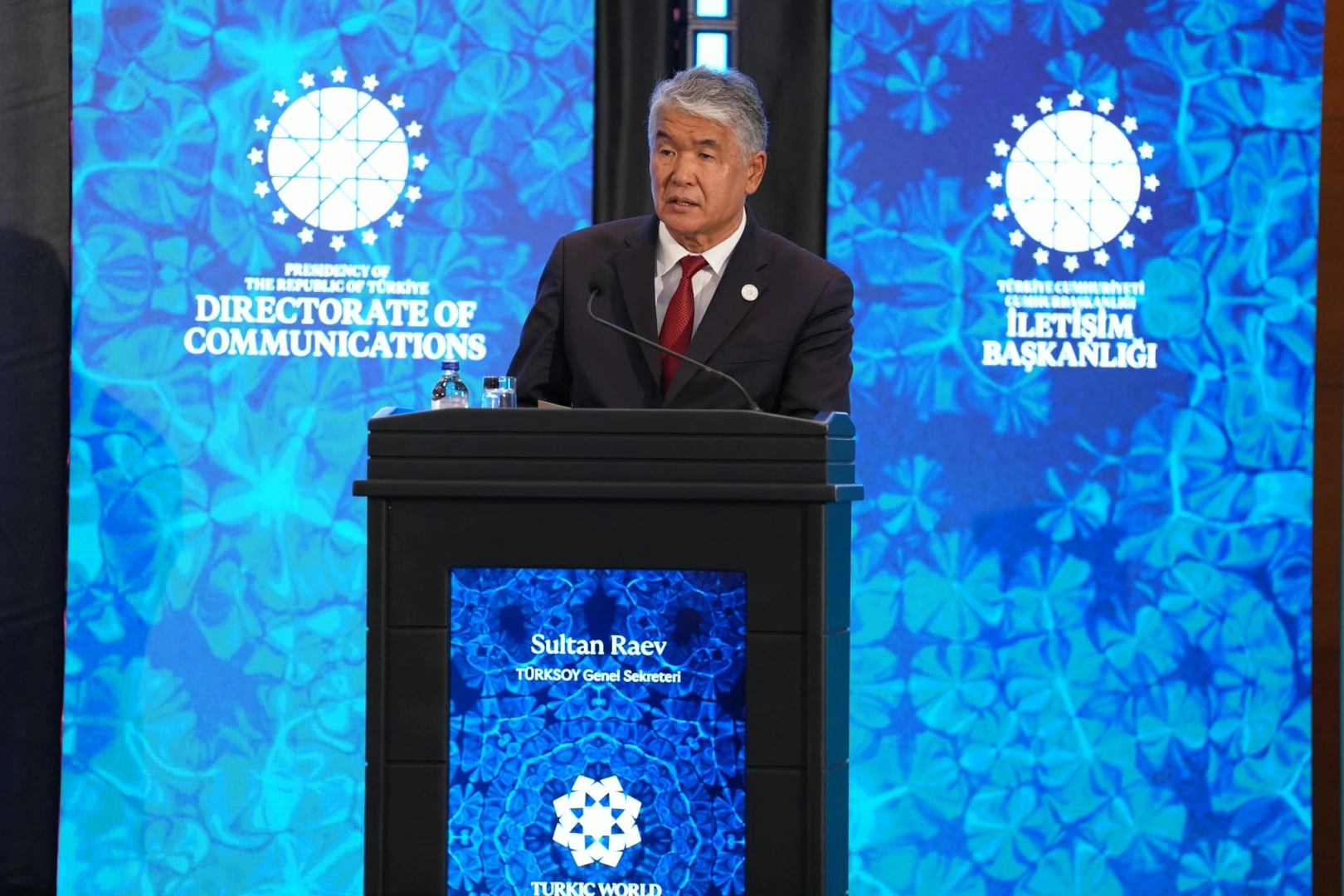
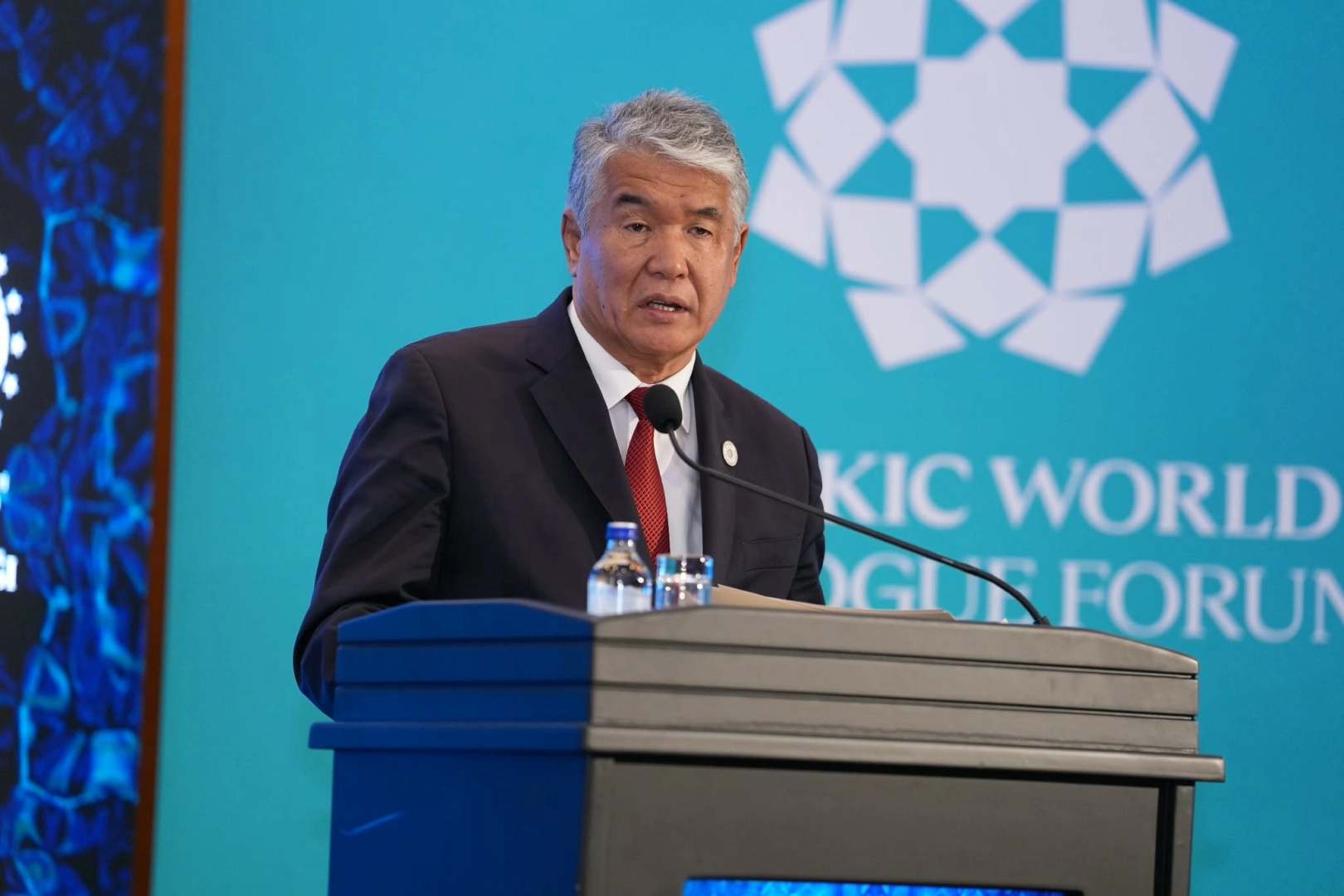
TURKSOY Secretary General Sultan Raev addressed the Dialogue Forum of the Turkic World

TURKSOY Secretary General Sultan Raev delivered the opening address at the panel discussion entitled ‘In the Footsteps of Gaspıralı: Language, Culture and Memory in the Turkic World’, held at the Dialogue Forum of the Turkic World in Ankara. Drawing on the intellectual legacy of Ismail Gaspıralı, Secretary General Raev highlighted the importance of a common language, cultural memory and cooperation in the Turkic World in the digital age.
Organised by the Directorate of Communications of the Office of the President of the Republic of Türkiye within the framework of the 13th Summit of the Organisation of Turkic States, the Dialogue Forum of the Turkic World took place in Ankara on October 30th–31st, 2026 under the motto ‘From Idea to Dialogue: Forward’ bringing together representatives from the fields of politics, diplomacy, academia, media and culture from the Turkic World.
In the opening speech he delivered at the panel entitled “In the Footsteps of Gaspıralı: Language, Culture and Memory in the Turkic World” held as part of the Forum, TURKSOY Secretary General Sultan Raev shared his views on the role played by culture, art and technology in the preservation of the shared civilisational heritage of the Turkic World and the transmission thereof to future generations.
“We must keep Gaspıralı’s ideas alive using today’s resources”
Noting that the “Tercüman” newspaper, which Ismail Gaspıralı began publishing in Bahçesaray in 1883, served as a bridge of ideas and hearts between Turkic communities across different regions, Secretary General Raev stated that Gaspıralı’s philosophy of “unity in language, thought and action” continues to guide the joint endeavours of the Turkic World today.
Emphasising that Gaspıralı was not merely a man of ideas but also pioneer who brought these ideas to life through education and publishing, Secretary General Raev said that keeping his legacy alive means more than simply repeating his words; it means pursuing his innovative approach in today’s context.
“Our main aim is to be able to understand one another directly”
Highlighting the importance of joint efforts within the Turkic World in the fields of language teaching, terminology and publishing as well as regarding a common alphabet, Secretary General Raev noted that these initiatives should serve to foster broader cultural rapprochement.
Secretary General Raev who further stated that joint language efforts are not merely about using the same letters stressed that the real aim is for the Turkic World to be able to directly understand one another’s thoughts, literature and scientific output.
Drawing attention to the impact of culture and arts in this process, Secretary General Raev emphasised the role of cinema, music and literature in strengthening cultural ties within the Turkic World, stating: “Sometimes a work of art can reach millions of people whom years of official efforts have failed to reach.”
Noting that this understanding has been at the heart of activities carried out by TURKSOY for over thirty years, Secretary General Raev stated that the greatest strength of the organisation lies in its commitment to our shared culture as well as in the unshakeable ties of brotherhood among peoples of the Turkic World.
“We must guide artificial intelligence with our own values”
Devoting a significant portion of his speech to digital transformation and artificial intelligence, Secretary General Sultan Raev stated that technological developments have created new opportunities and responsibilities for the cultural heritage of the Turkic World.
Secretary General said:“We must be a nation which guides artificial intelligence with its own values, rather than a nation which is guided by it” and emphasised the need for a civilisation’s memory—comprising language, literature, music, epics and traditions—to be accurately and comprehensively represented in the digital world.
Pointing out that cultures which are inadequately represented in the digital sphere risk being incompletely or incorrectly recognised in future information systems, Secretary General Raev highlighted the importance to develop shared digital archives, cultural heritage platforms, language technologies and educational activities and curricula.
Noting that however significant opportunities offered by technology might be for the preservation of cultural heritage, Secretary General stressed that the living aspect of culture must not be neglected either and added that people, education, art and cultural production must be at the heart of this transformation.
“The ‘Tercüman’ newspaper of our age could be the shared bridges built in the digital world”
In the conclusion of his speech, Secretary General Sultan Raev recalled how Ismail Gaspıralı used the communication tools of his own era for the shared future of the Turkic World, and stressed that the same motivation must be demonstrated today through technological means of our age.
Secretary General Raev stated: “Gaspıralı’s ‘Tercüman’ built bridges between regions in its own time. The ‘Tercüman’ of our era, however, could be the shared bridges of knowledge, language and culture to be built in the digital world.”
Emphasising that the Turkic World possesses strong potential through its independent states, joint institutions, universities, sccholars and artists, Secretary General Raev concluded his speech by noting that based on the great civilisational heritage of the past, joint activities to be undertaken today must yield sustainable results in the future.
Scholars from the Turkic World gathered at the same panel
The panel, moderated by Prof. Dr. Esma Özdaşlı, featured Akif Aşırlı, Editor-in-Chief of the Şark newspaper from Azerbaijan, Mr. Ulugbek Orazbayulı Esdaulet, a poet, author and journalist from Kazakhstan, Prof. Dr. Juliboy Eltazarov, the Dean of the Faculty of Philology at the State University of Samarkand in Uzbekistan, Prof. Dr. Elmira Huribayeva from Kyrgyzstan, and Mr. Oktay Öksüzoğlu, the Representative of the Turkish Republic of Northern Cyprus to the Council of Elders of the Organisation of Turkic States.
The panel discussed opportunities of cooperation within the Turkic World regarding a common language, cultural identity, historical memory and future generations, within the framework of the intellectual legacy of Ismail Gaspıralı.
Media Gallery
(2)