Deputy Secretary General Yusuf calls on Turkish Youth in Europe to embrace the ‘Turkic World

Mr. Sayit Yusuf, the Deputy Secretary General of the International Organisation of Turkic Culture (TURKSOY) stated that young Turks living in Europe should familiarise themselves not only with Anatolia but also with the region of Turkestan, which is the primary source of their civilisation.
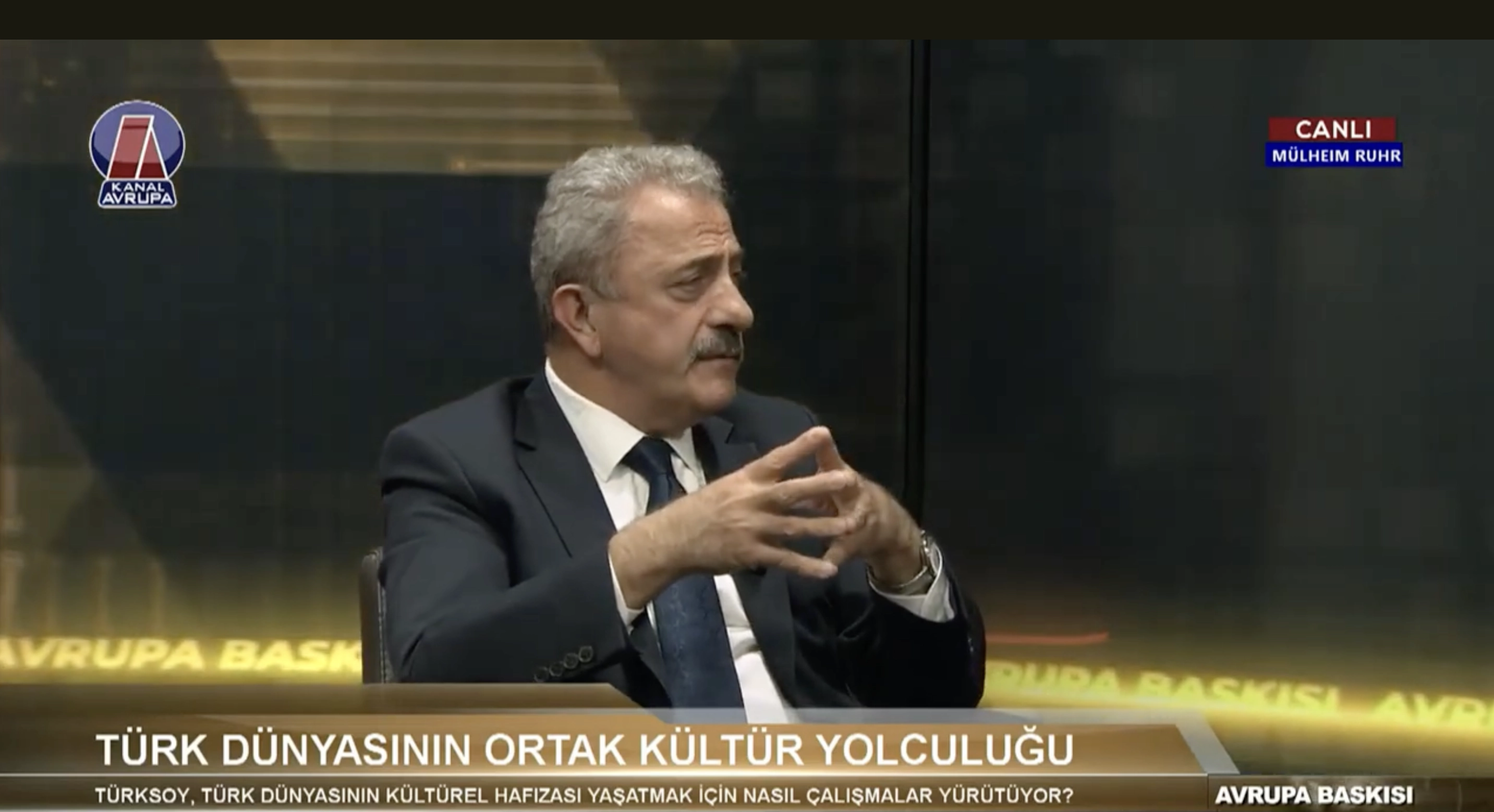
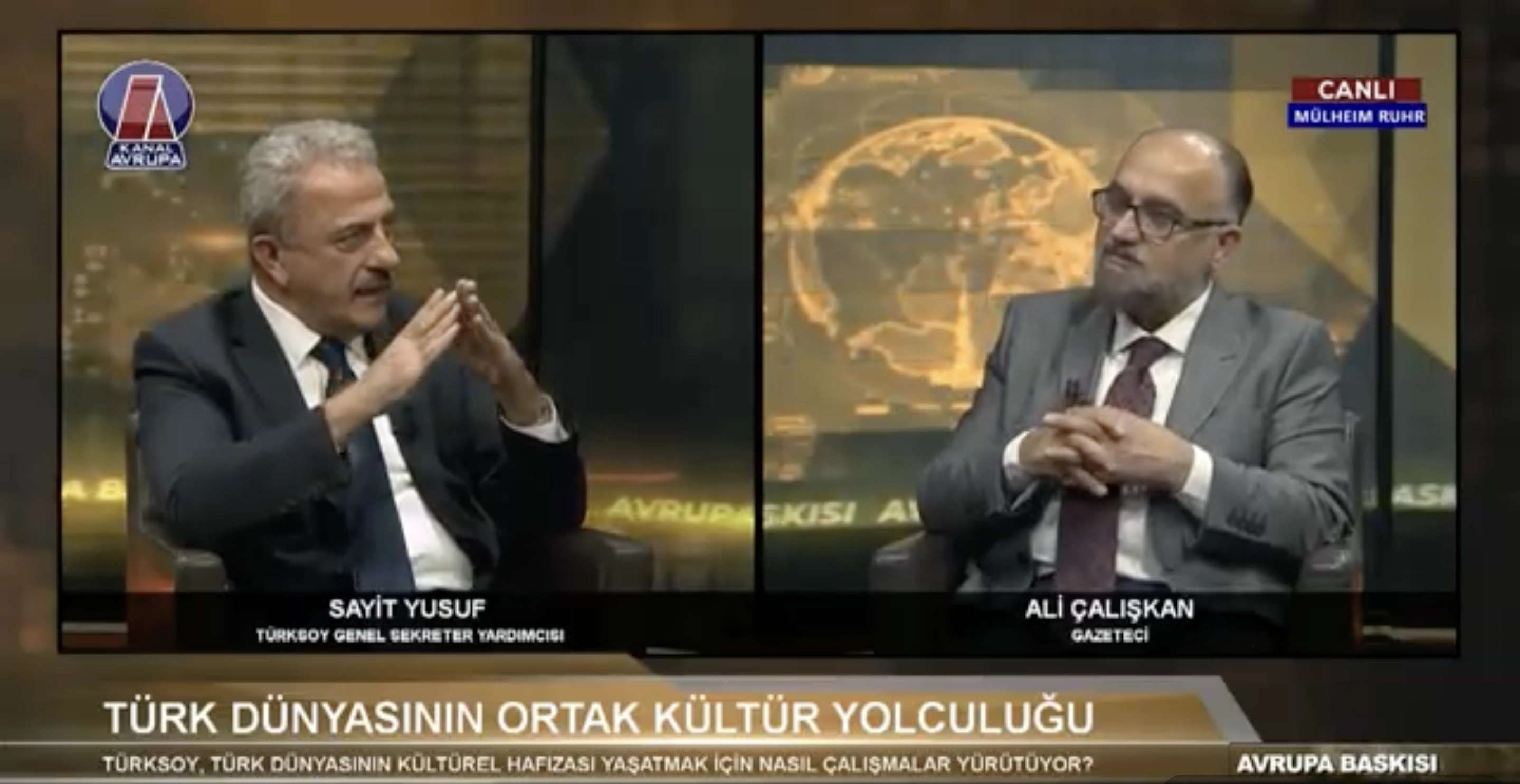
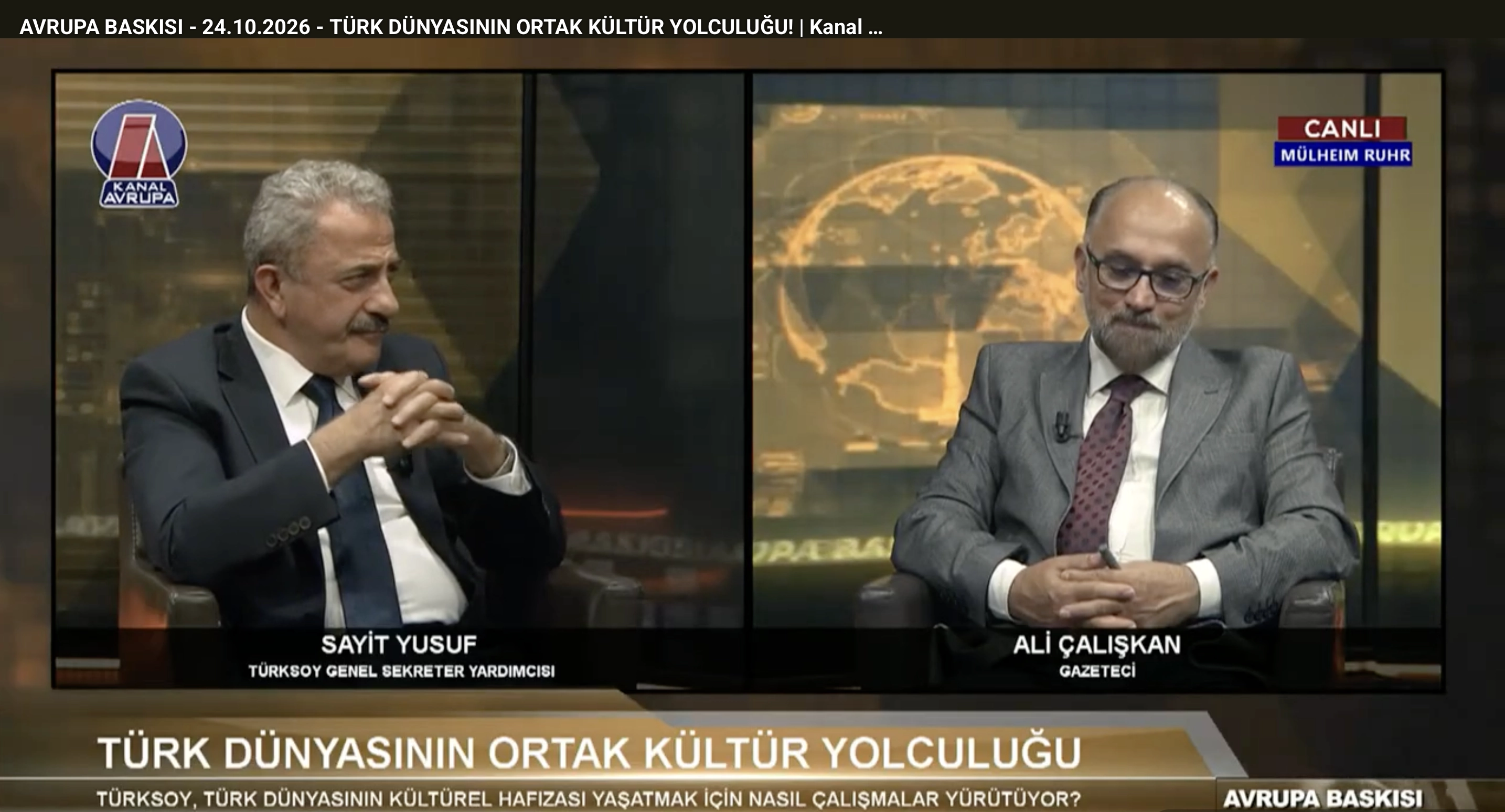
Appearing as a guest on the ‘European Edition’ programme broadcasted on the Kanal Avrupa television channel, Deputy Secretary General Yusuf shared his views on the cultural integration of the Turkic World and the Turkish diaspora in Europe.
Describing TURKSOY as “the UNESCO of the Turkic World” and emphasising that TURKSOY has undertaken a cultural mission which has nothing to do with politics, Deputy Secretary General Yusuf added that the Organisation aims at reuniting peoples which were once disconnected from eachother through a cultural bridge.
“Being Turkish is not merely a matter of ethnic identity”
Recalling that the current year is being celebrated as the “Year of Ziya Gökalp”, Deputy Secretary General Yusuf illustrated the perspective of the Organisation on the Turkic World through Ziya Gökalp’s definition of Turkishness.
Stressing that TURKSOY does not view Turkishness as a merely ethnic origin, Deputy Secretary General Yusuf said: “Based on the definition of Turkishness as it is described in Ziya Gökalp’s discourse, we also recognise as Turkish those kindred communities who feel Turkish, behave like Turks, have shared a common destiny with Turks, and share common expectations for the future. At TURKSOY, we are working together with these communities, hence, transcending ethnic boundaries.”
Mr. Yusuf also added that schools opened in the Turkic World in the past, thanks to the “Jadidist” movement pioneered by intellectuals such as Ziya Gökalp and Gaspıralı Ismail, laid the foundations of today’s cultural consciousness.
Do not underestimate young Turkish people of Europe for the way they speak Turkish
Drawing attention to the fact that the Turkish diaspora in Europe is now building a permanent community, Deputy Secretary General Yusuf Yusuf expressed his disapproval of the criticism towards young Turkish people born and raised abroad for their way to speak Turkish language.
Stating that language is a living means of communication which is influenced by its geographical context, Deputy Secretary General Yusuf said: “No one has the right to look down on young Turkish people of Europe for the way they speak Turkish as this is about a new synthesis engendering a new culture. What we should really fear is not the change observed in the Turkish language, but young people being driven to crime, becoming assimilated or completely forgetting Turkish language. We say “Yes” to integration, but “No” to assimilation.”
‘Turkish’ warning regarding the common alphabet and TV Series Sector
Describing Uzbekistan’s President Shavkat Mirziyoyev’s move to align the Uzbek alphabet with the letters used in Turkish as a historic development in terms of the achievement of linguistic unity, Deputy Secretary General Yusuf emphasised Ismail Gasprali’s motto: ‘Unity in language, thought and action’.
Touching upon the role of the media in cultural diplomacy, Mr. Yusuf addressed Turkish TV series and film producers, saying: “People in many regions of the world, from the Balkans to North Africa, are learning Turkish from TV series. Screenwriters and producers must bear the responsibility of using the language in its most beautiful and correct form, without distorting it, whilst being aware that they are actually teaching Turkish to wider audiences.”
“Young people should explore the Turkic World”
Advising Turkish youth in Western Europe to research their roots, Mr. Yusuf stated that young people should not limit their sense of belonging solely to their parents’ hometowns in Anatolia.
Deputy Secretary General Yusuf concluded his remarks saying: “Our young people should research Khoja Akhmet Yassawi, Maturidi and Khiva. They must definitely visit Bukhara, Samarkand, Kazan and the Orkhon Valley. While they should draw strength from their past without being bound by it, they should face the future with the strength and richness of their own civilisation. At the heart of Turkish culture lies the tolerance of Yunus Emre, Mevlana and Khoja Akhmet Yassawi. Racism cannot emerge from a nation which grew strong with such a history. The hate speech occasionally seen on social media is largely due to nothing more than disinformation.”
Media Gallery
(3)